
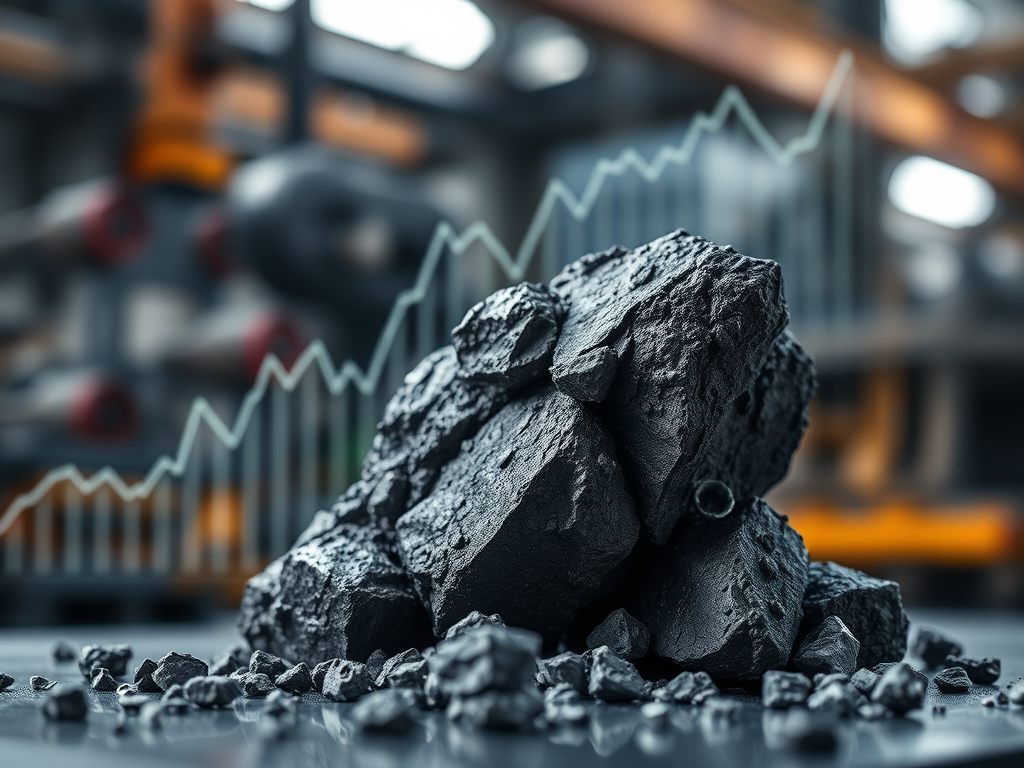
The year 2025 has brought a dramatic shift to the global materials landscape, driven by a powerful rise in the Tungsten Price across major industrial and strategic sectors. Known for its exceptional hardness, extreme melting point, and unique density, tungsten plays a critical role in manufacturing, energy systems, aerospace engineering, and defense applications. The recent surge in the Tungsten Price marks a turning point—indicating not just temporary fluctuation but a structural transformation of the Global Tungsten Market.
With Chinese concentrate prices exceeding RMB 317,000 per ton and international APT values staying above USD 600 per mtu, the global market has entered a period of sustained scarcity and heightened procurement urgency. Several underlying forces—including supply limitations, geopolitical reshaping, and accelerated industrial consumption—have collectively pushed the Tungsten Price to new highs. This article examines the latest developments, the structural imbalances behind the price movement, and the long-term implications for industry and global supply chains.

⚙️ Latest Tungsten Price Overview
The Tungsten Price has increased sharply across both primary raw materials and processed intermediates. China, the world’s largest producer, continues to influence pricing due to its dominant share of global output. Domestic quotations for 65% WO₃ concentrates have remained near RMB 317,000–318,000 per standard ton, while APT in international markets remains firmly above USD 600 per mtu. These figures highlight tightened availability, reduced inventories, and stronger procurement among high-value industrial users.
This pricing environment signals more than a temporary imbalance. The widening gap between production growth and consumption—combined with policy-driven restrictions and escalating global competition—has created sustained upward pressure on the Tungsten Price. Market data shows longer lead times, higher premiums for spot shipments, and increased reservation volumes from aerospace, tooling, and energy-related industries. The consistently rising Tungsten Price reflects deep-rooted stress within the global tungsten ecosystem.
🛠️ Supply Tightness Behind the Tungsten Price Rise
The most significant contributor to the rising Tungsten Price is the tightening supply environment. China’s mining quotas, ecological regulations, and export controls directly limit the amount of primary concentrate available to the international market. Even as prices increase, mines cannot expand output rapidly due to strict environmental compliance, technical constraints, and the high cost of accessing deeper ore bodies.
Around the world, many major mining regions face declining ore grades, which result in higher processing costs and reduced efficiency. Lower-quality deposits require additional beneficiation steps, more energy, and greater labor input—further increasing extraction costs. The rising cost structure creates a natural floor for the Tungsten Price, ensuring that prices remain elevated even during periods of slowed demand.
Recycling, while increasingly important, does not sufficiently compensate for limited primary production. Scrap availability depends on manufacturing cycles and cannot scale quickly enough to address chronic shortages. As a result, the imbalance in supply continues to strengthen the upward movement of the Tungsten Price.
🚀 Demand Expansion Across Global Industries
Demand growth has outpaced supply, turning the Tungsten Price into a critical variable for industries across the world. Tungsten carbide tools remain essential for machining, mining, construction, and energy exploration. As manufacturing activity rises globally, consumption of carbide powders increases accordingly, placing heavy pressure on raw material supply chains.
Aerospace and defense sectors also play a central role. Tungsten is indispensable for aircraft ballast systems, missile components, kinetic penetrators, shielding materials, and high-temperature structural parts. Geopolitical tensions and expanded military modernization programs have accelerated strategic stockpiling, increasing the need for stable tungsten supply. This strategic behavior adds significant upward force to the Tungsten Price.
High-tech sectors—including semiconductor fabrication, vacuum furnace engineering, energy storage technologies, and advanced electronics—continue to expand rapidly. These industries rely on tungsten-based materials for high-precision components, deposition targets, contacts, and thermal systems. As global production of electronics and advanced materials increases, demand intensifies, adding additional strain to Tungsten Supply and Demand patterns and supporting higher price levels.
🔄 How the Tungsten Price Increase Spreads Through the Industry
The rising Tungsten Price affects the entire industrial chain through a cascade effect. Higher concentrate costs directly influence APT production, forcing refiners to raise their quotations. Powder metallurgical products—such as tungsten powders, tungsten carbide, and heavy-metal alloys—inherit these increased costs due to their dependence on APT feedstock. Toolmakers subsequently adjust prices for inserts, drills, and wear-resistant components, which raises operational costs across manufacturing, mining, and automotive sectors.
In response to the elevated Tungsten Price, downstream industries increasingly adopt early procurement strategies. Buyers secure larger inventory volumes in anticipation of further price increases, which reduces spot market liquidity and intensifies scarcity. This behavioral shift amplifies short-term market pressures and further supports rising price trends.
Tungsten’s unique performance characteristics mean there are few viable substitutes. Alternative materials cannot match tungsten’s combination of hardness, density, and heat resistance. This lack of substitution ensures that demand remains firm regardless of pricing, making the Tungsten Price more resilient and less sensitive to typical industrial cycles.
🌍 Industry-Wide Impact of the Tungsten Price Surge
The Tungsten Price Surge impacts upstream, midstream, and downstream sectors in different ways. Mining companies benefit from stronger margins but struggle to expand production due to capital requirements, regulatory obligations, and geological challenges. Meanwhile, midstream processors face intense margin compression as they attempt to balance elevated feedstock prices with customers’ expectations for consistent quality and timely delivery.
Downstream industries—including aerospace, energy, semiconductors, automotive manufacturing, and heavy industrial applications—experience significant cost increases. Tungsten carbide tools become more expensive, raising machining and drilling costs. High-temperature components used in energy systems, furnace assemblies, and aerospace structures also rise in price. Electronics manufacturers face higher costs for contacts, filaments, sputtering targets, and shielding components.
These expanded cost structures demonstrate how deeply the Tungsten Price influences modern industrial systems. No sector reliant on high-performance materials is insulated from its effects.
🔮 Future Outlook for Tungsten Price
Short-term expectations indicate that the Tungsten Price will remain elevated due to limited concentrate availability, strong global industrial activity, and geopolitical uncertainty. Strategic industries—especially aerospace and defense—will continue securing long-term supply contracts, reinforcing upward momentum.
Looking ahead, new mining projects across Africa, Central Asia, and South America may eventually ease some supply pressure, but long exploration and development timelines make rapid relief unlikely. Improvements in recycling efficiency will contribute, but recycled feedstock cannot fully replace primary production.
In the long term, the imbalance in Tungsten Supply and Demand is expected to persist due to the expanding needs of high-tech manufacturing, defense modernization, and advanced energy systems. These structural forces suggest that the elevated Tungsten Price represents a new equilibrium rather than a temporary spike.
🧩 Conclusion
The rise in the Tungsten Price in 2025 marks a defining shift for industries that depend on high-performance materials. Driven by constrained supply, accelerating industrial consumption, and growing strategic importance, tungsten has entered a sustained high-value phase. The current conditions in the Global Tungsten Market reflect deeper global changes in resource security, geopolitical competition, and technological advancement.
As the world becomes more reliant on advanced manufacturing and strategic materials, tungsten’s role becomes ever more critical. The evolution of the Tungsten Price is therefore more than a market trend—it is a signal of how global industries will adapt, innovate, and reorganize around the realities of scarcity and strategic necessity.
📞 Contact Us
For inquiries, technical support, or custom tungsten material solutions, please reach out to us:
📧 Email: sales@niticu.com
📱 Phone / WhatsApp / WeChat: +86 13335373172
🏭 Factory: Baotai Road Industrial Park, High-tech Zone, Baoji City, Shaanxi, China
🌐 Website: https://niticu.com
📩 We respond to all inquiries within 24 hours.
